
The Former Whitbread Hop Farm
Whitbread brewery had a close connection with Kent. One of the best known of these connections was the Whitbread Hop Farm at Beltring, just outside Paddock Wood, situated on a 400-acre (1.6 km2) site and housing the largest collection of oast houses in the world.
The Hop Farm is in fact one of the most famous and recognisable features of Kent and records show that the farm site itself is over 450 years old. Hops were first introduced into England from Flanders at the end of the 15th century and were grown commercially on the Beltring site from the mid-16th century. The main reason why Kent became prolific in hop growing was that not only did it have ideal soil for growing hops but there was also plenty of wood to produce the charcoal used in oast houses for drying the crop. For many years the Beltring site was owned and managed by the Cheesman family but In the 1880s, when hop production in Kent was at its height, the farm passed into the joint ownership of E A White and the Draper’s Company (third in the order of precedence of the City of London’s twelve great livery companies) and it was during this stage of its life that the site was fully developed with the distinctive oasts which are still to be seen today.
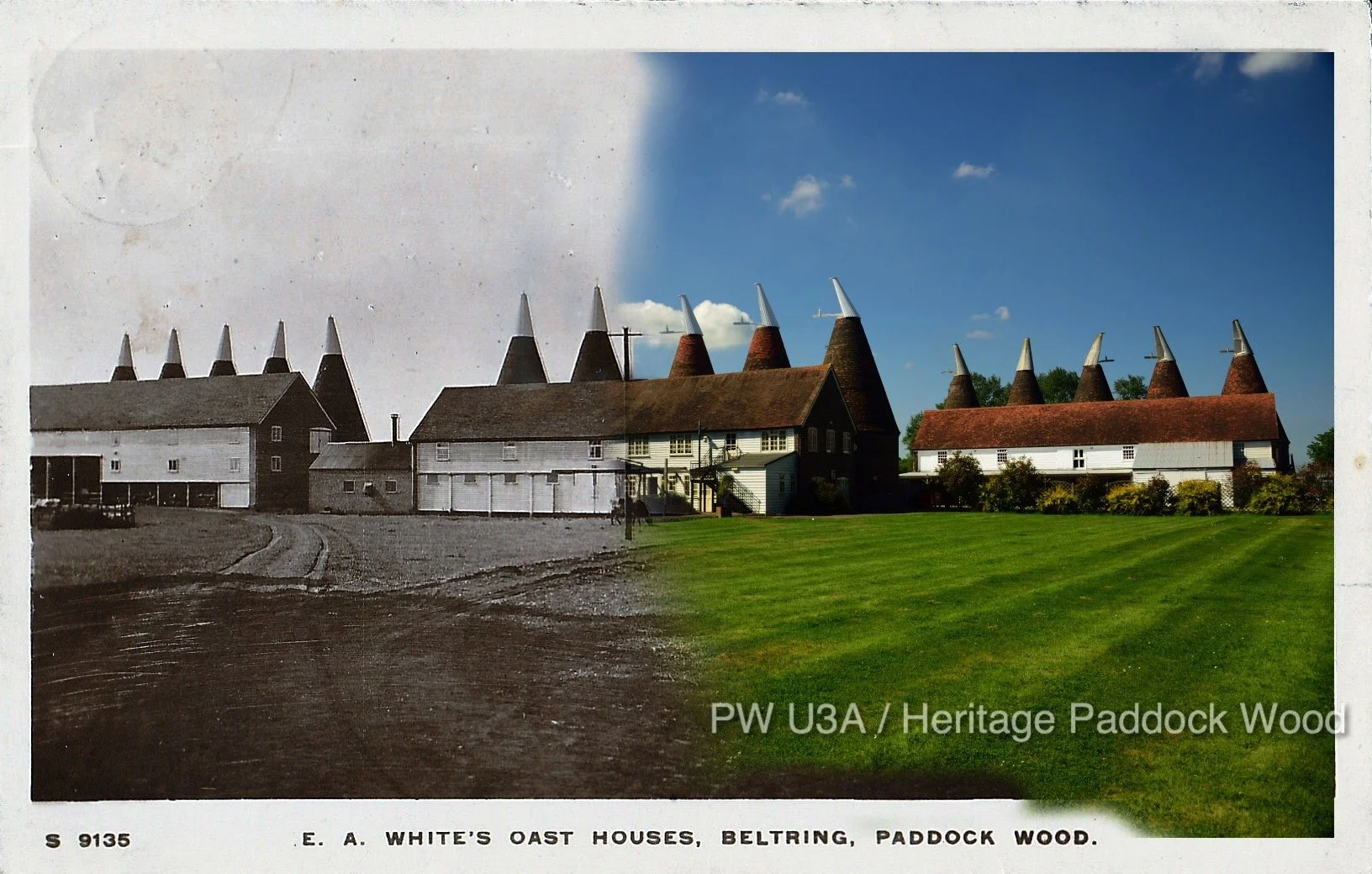
This picture was created by members of Paddock Wood U3A in 2018 ©
The site contains five separate groups of oasts (known as Bells after Bell Field on which the buildings were constructed). Bells 1, 2, 3 and 4 are at right angles to the adjacent A228 highway (Branbridges Road) whilst Bell 5 is located slightly further back and is sideways on to the road. All of these Bells are Grade II* listed structures.
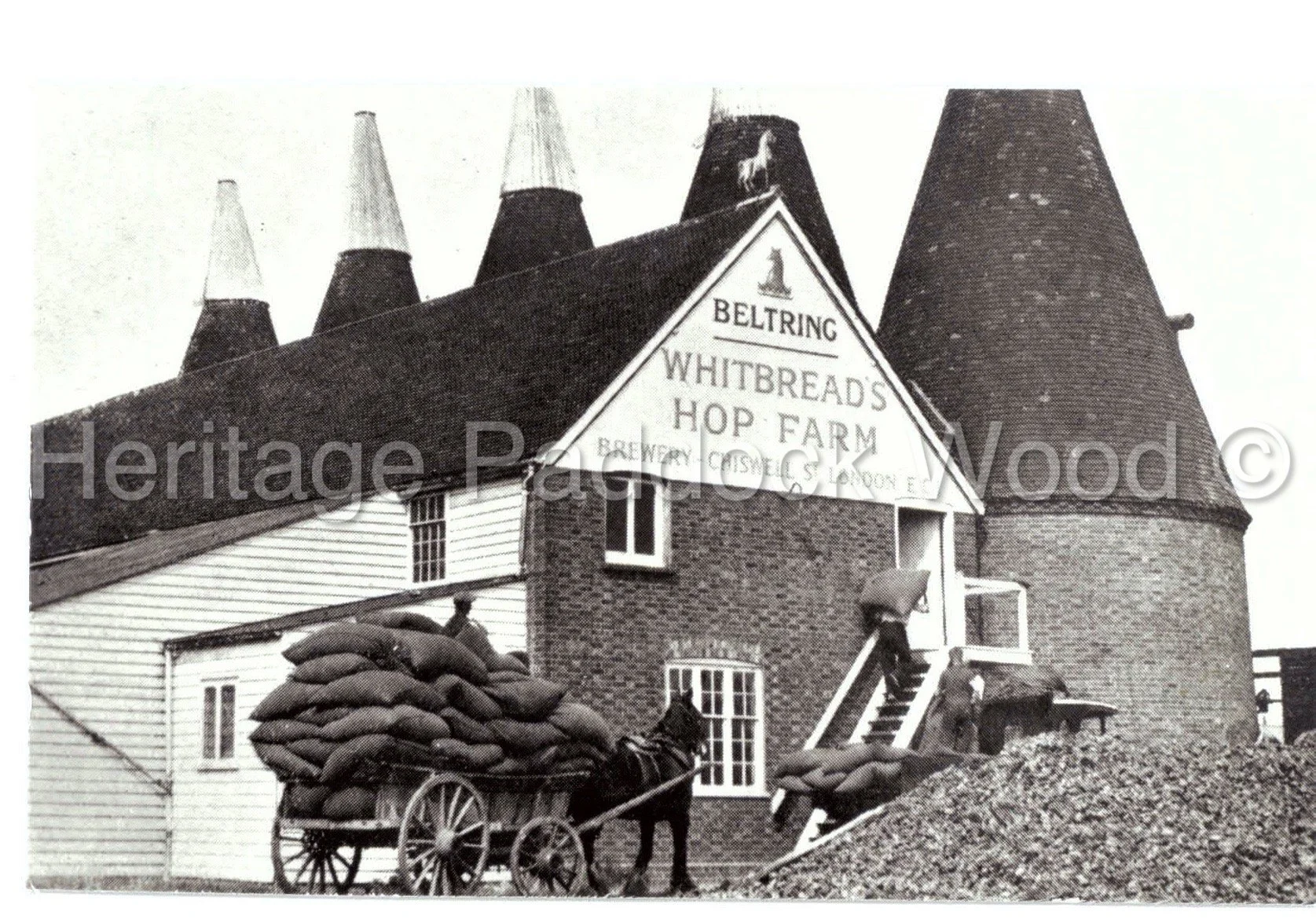
When Messrs Whitbread and Company Ltd bought the hop farm site in 1920 it continued as a working hop farm, naturally using the existing buildings. Bells 1-4 had been constructed in the early 1900s, each with five circular kilns or roundels with roofs made of hand-made clay peg tiles. In 1936 Bell 5 was added to the complex; perhaps not surprisingly it was constructed in a more modern style with 5 internal kilns, with cowls on the roof ridge.
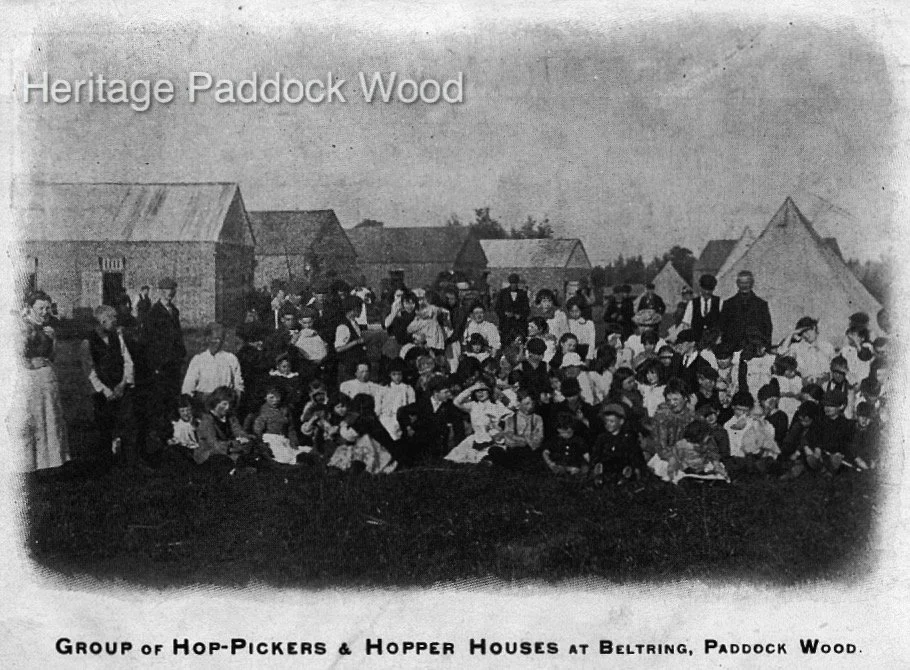
An old image of the site ©
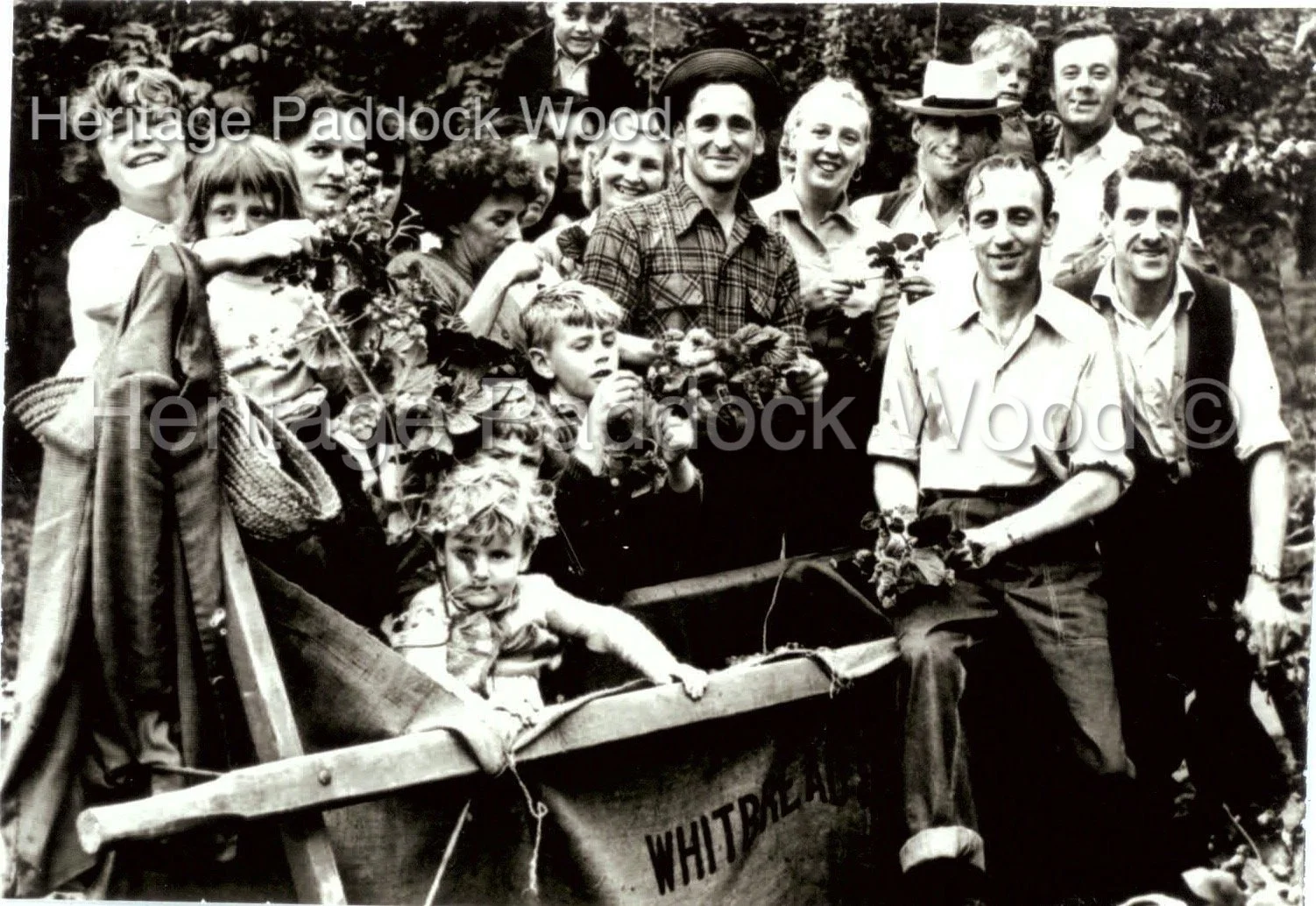
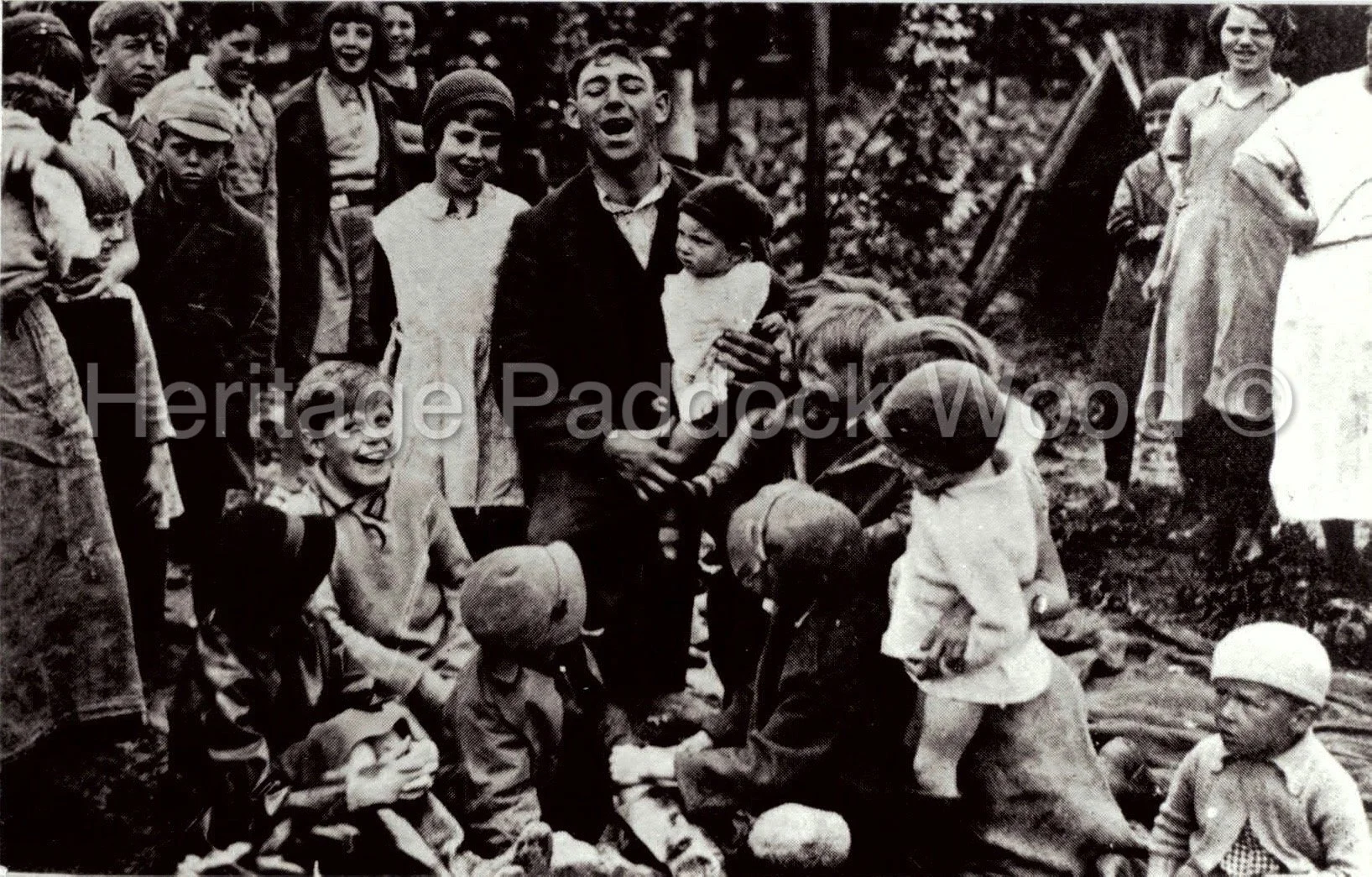
During the heyday of hop picking, both before and after the 1920 purchase by Whitbread, some 4,000 hop pickers (adults and children) were employed on the farm at the height of each season. This was when thousands of hop pickers, mainly from the areas of Rotherhithe, Deptford and Bermondsey, would come down from London on specially laid-on hop pickers’ trains to Paddock Wood and Beltring. This for them was their annual summer holiday and many of the families came generation after generation. The hops were picked by hand into bins and transferred to the oast houses for drying. At its peak, 200 acres of hops were dried at the farm every year.
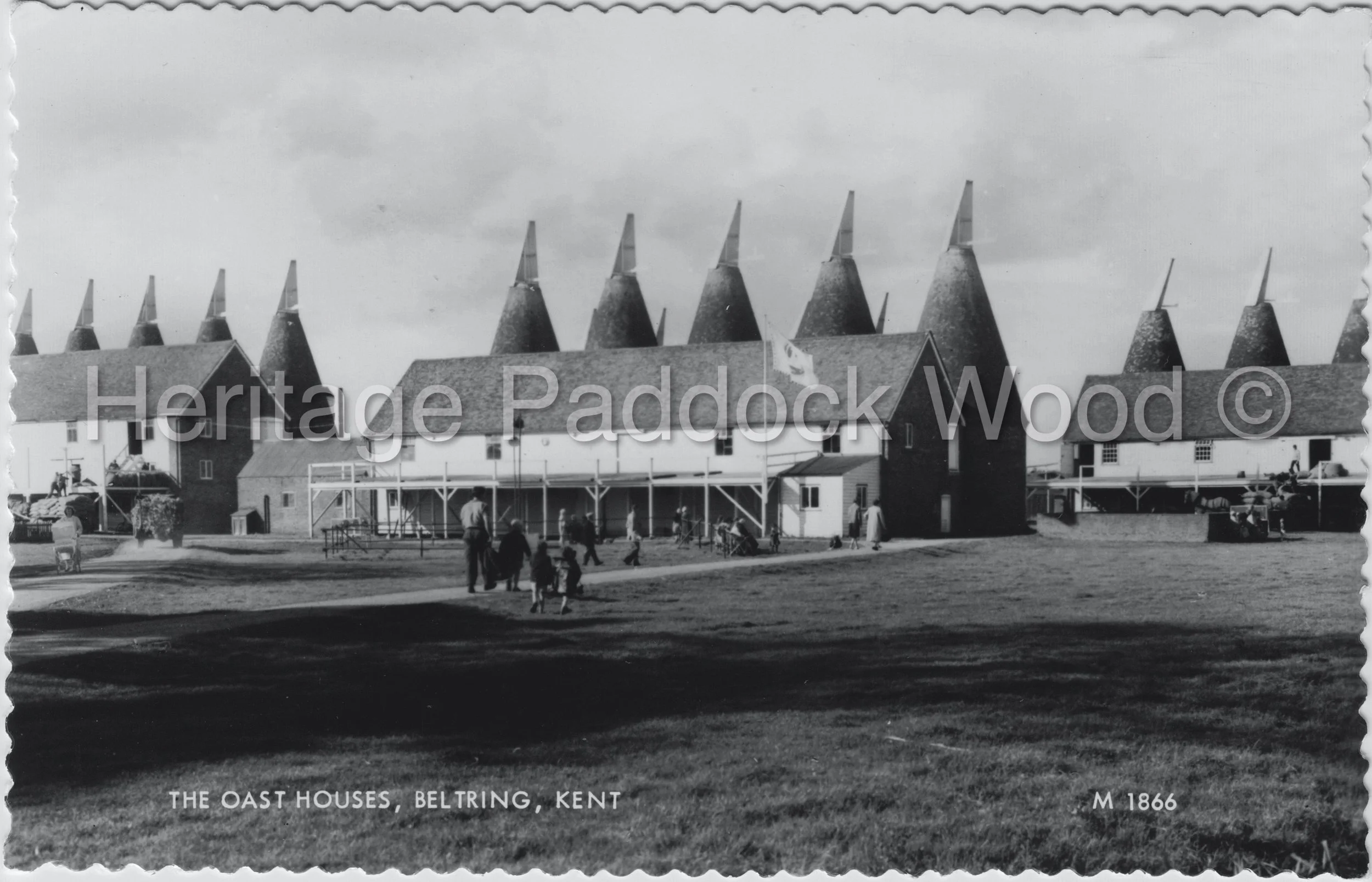
After the second world war the hop industry gradually became more and more mechanised and the Whitbread Hop Farm eventually became the last strongholdof large-scale, good old fashioned hand picking of hops in Kent. But this inevitably had to end and 1968 saw the last season of hop picking by hand. Coincidentally in late September 1968 severe flooding damaged the on-site hop pickers’ dwellings beyond repair. The huts were demolished a few months later following which all future picking was done by machine.
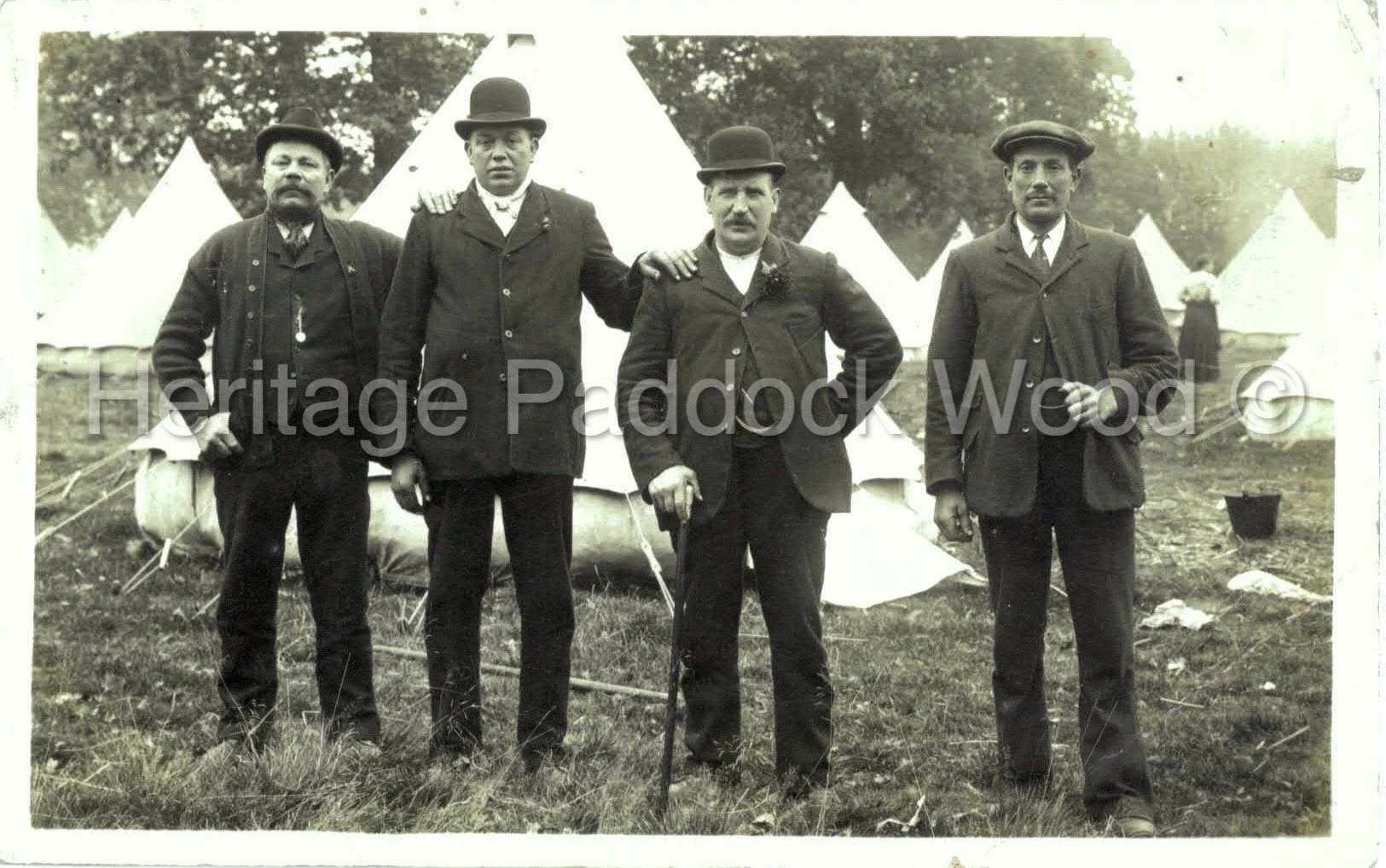
Bell Field The Hop Farm ©
The gradual advance of mechanisation meant that there was less call for drying by the traditional method. Bell 1 was last used in 1946 and Bell 5 ceased to operate in 1973. Bell 4 was abandoned in 1980 as were Bells 2 and 3 in 1984. But the Whitbread Company had long been aware of the site’s potential as a tourist attraction and in 1982 the farm was opened up to visitors as a tourist and education centre together with a museum dedicated to the hopping industry. It also had a large collection of shire horses. The famous London-based Whitbread shires (who amongst other duties pulled the Lord Mayor’s coach through the streets of London on ceremonial occasions and also pulled the Speaker’s coach at the Coronation of Queen Elizabeth II in 1953) spent their summer holidays in the Beltring paddocks. It was a wonderfully heartwarming sight to see these giant drayhorses emerge from the boxes which had transported them down from London literally leaping and prancing around in the fields like young colts.
In 1997 Whitbread sold the hop farm and it was developed into a commercialised family entertainment park known as the Hop Farm Family Park mostly aimed at children. An on-site Hop Story Museum still depicted what life was like as a hop picker and future generations could still enjoy learning about hop picking.
In 2006, The Hop Farm Family Park was sold to Kent Attractions Ltd and then in 2007 it was again sold. In 2012, the Hop Farm underwent a radical restructure in an effort to halt a five-year slide in visitor numbers, however in 2013 Hop Farm Trading Ltd went into liquidation blaming decreasing numbers of visitors as well as continued bad weather. It was also announced in December that one of its biggest annual events, War and Peace was moving to Folkestone.
The Hop Farm Family Park finally closed in 2023 and at the time of writing (2026) there are no plans to re-open it. The owners are apparently focussing on other areas of the business including the Hop Farm Touring and Camping Park which includes a camp site and sites for static caravans. They also hire out the land for events such as boot fairs, circuses and the Wealden Times Midwinter Fair. Other businesses have been recruited to operate out of the buildings. This includes “Shires Oast” a Wedding and Event venue which opened in 2024.
For those of us who remember the Whitbread hop farm as a working farm and then as a thriving tourist attraction, we look back sadly on the day when Whitbread sold the business. The museum continued for some years and Heritage Paddock Wood has a long list of agricultural items which were donated by local residents and housed in the original museum.
No one appears to know what happened to all these items which were donated with love and pride. If anyone has any information about their fate please let us know
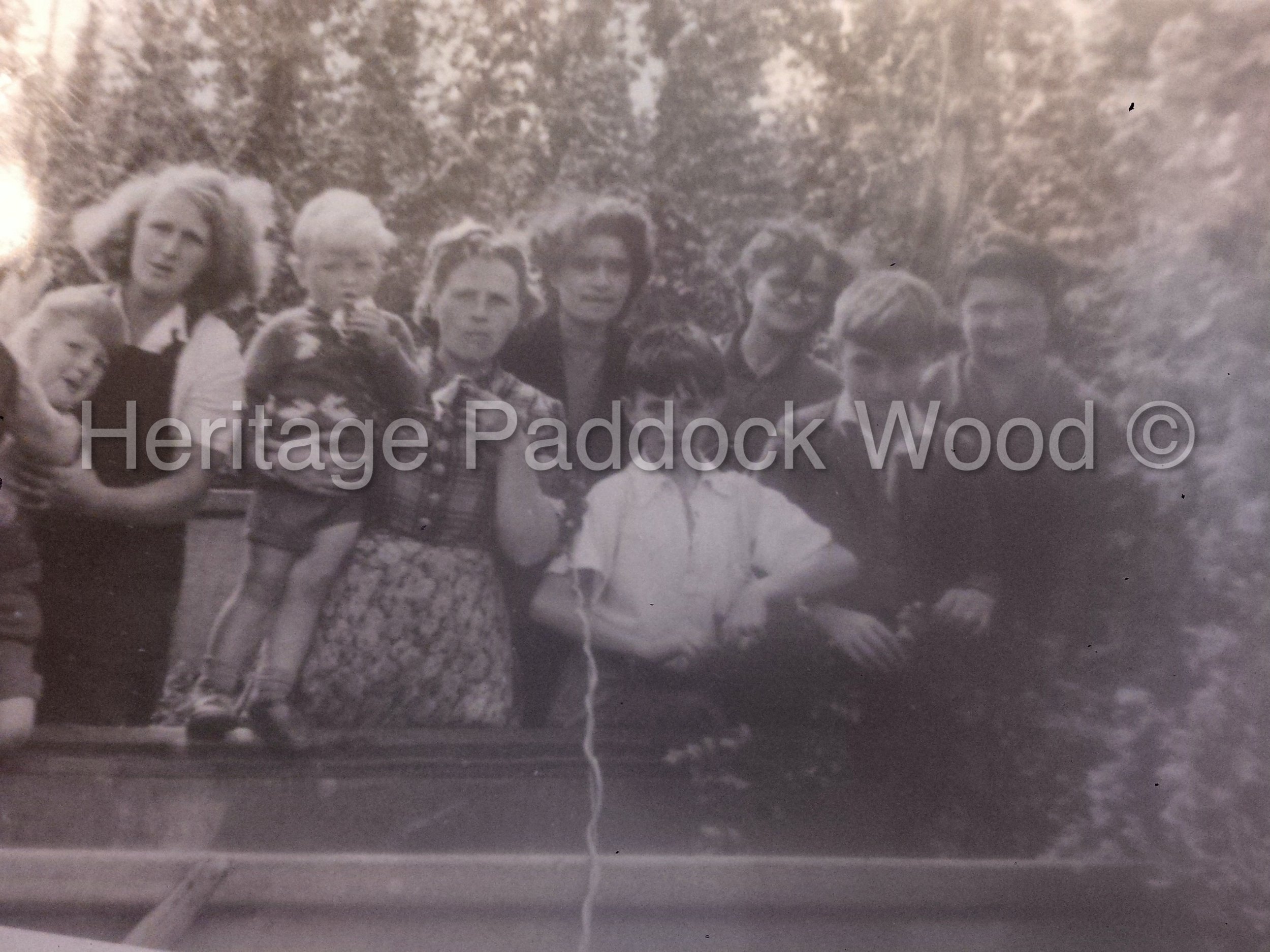
A range of pictures showing the hop farm in its heyday and the pickers can be seen below.
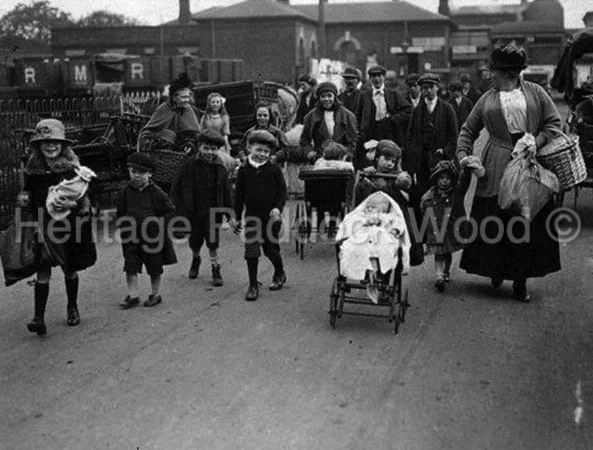
Arriving at Paddock Wood Station. Hop-pickers and their families ©
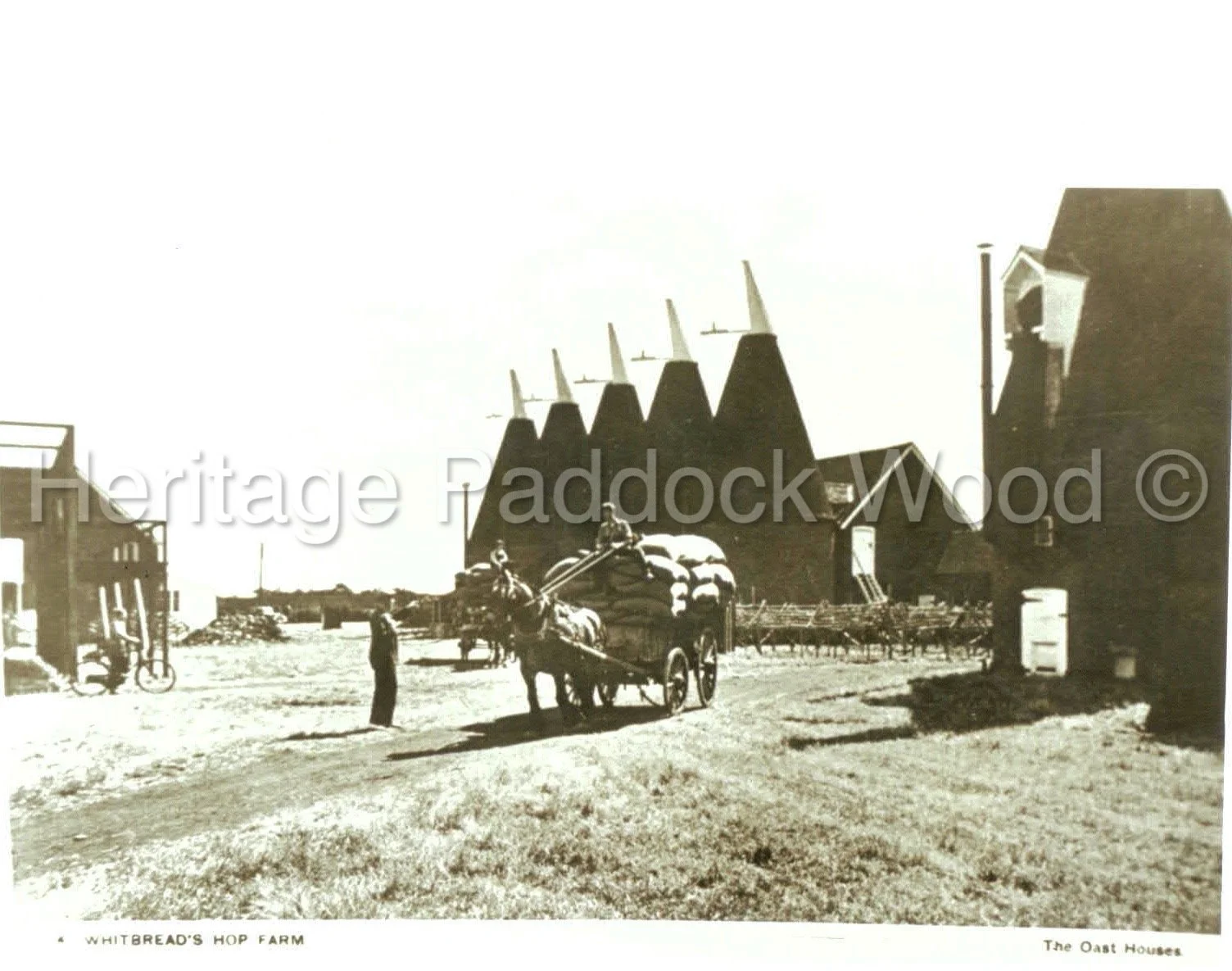
Hop farm with cart loaded with sacks
Article written by John and Meryl Flashman, with thanks to Heritage Paddock Wood for the pictures
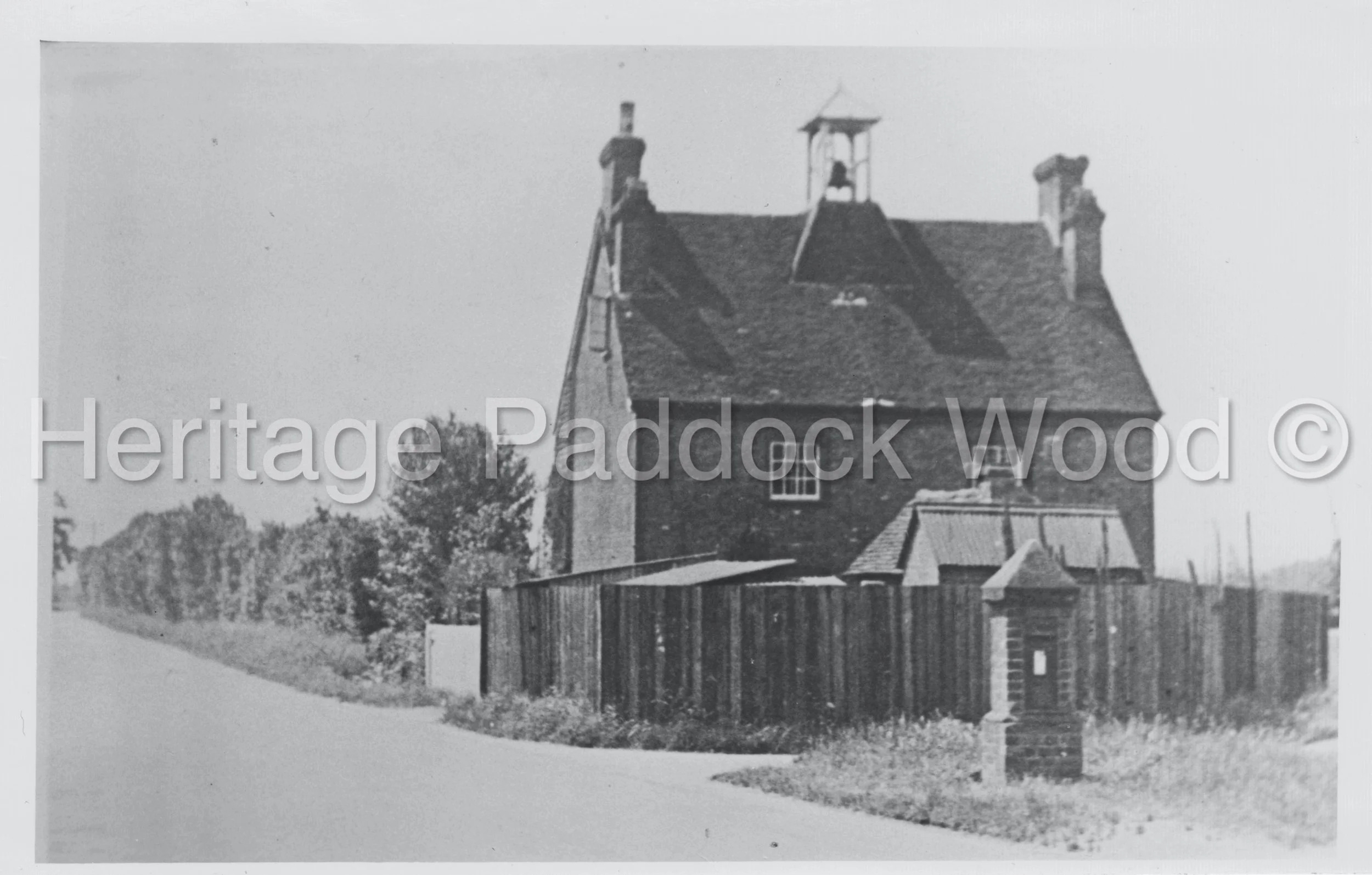
Bell cottage(s) The bell was used to communicate with those working in the fields ©
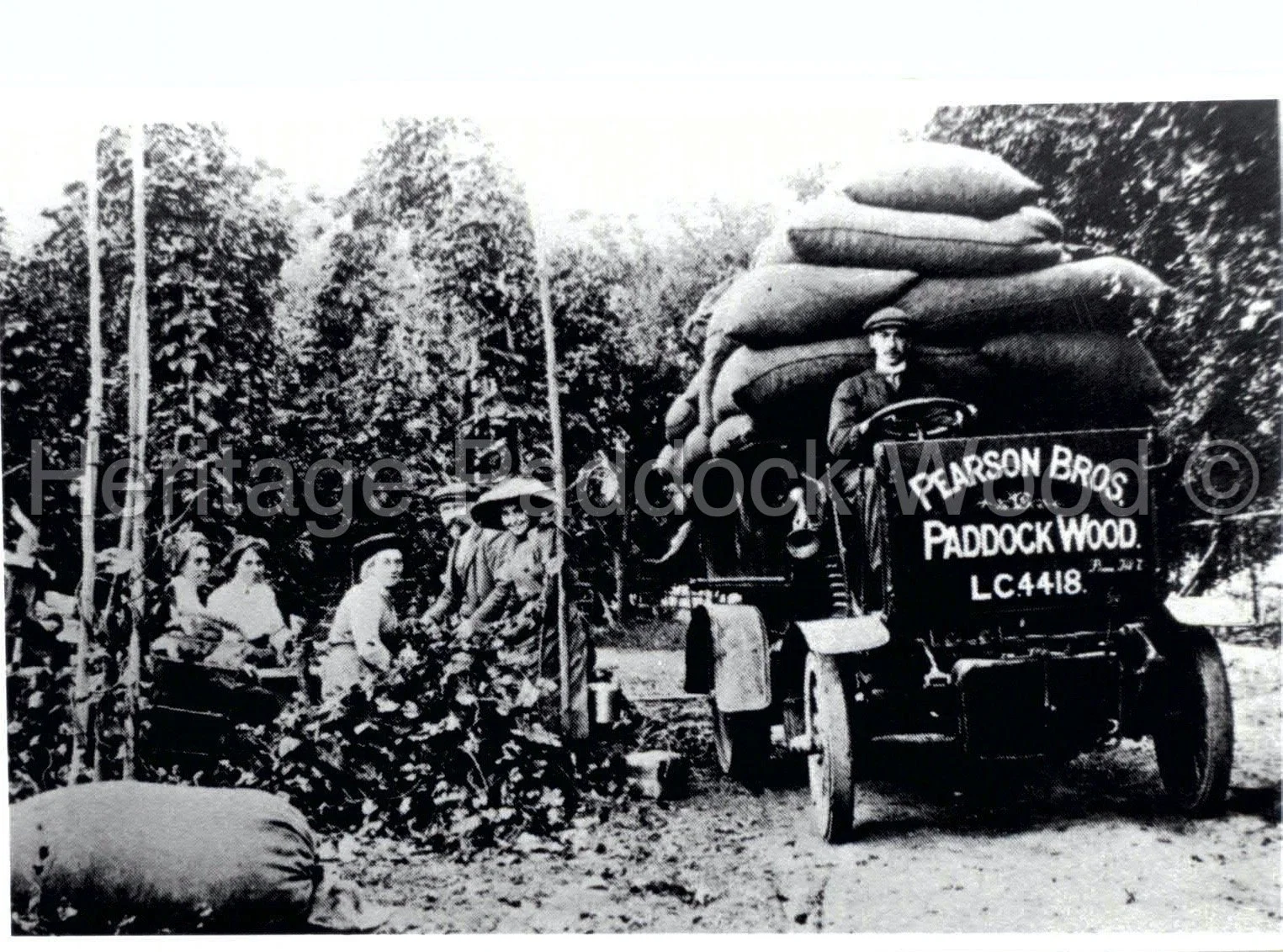
A lorry from Pearsons used for hopping (Pearsons was known for the large shop once on on Maidstone Road next to the Smarden Flats) ©