
Woman on triple murder charge in sleepy Matfield
Tucked away in the north east corner of the closed St Andrew’s Churchyard in Church Road, Paddock Wood lies a very simple grave stone dedicated to a mother and daughter, Dorothy and Freda Fisher who died July 9th 1940. These two ladies along with their servant Charlotte Saunders were murdered at Crittenden House, Matfield. This was a case which hit the national headlines and was tried at the Old Bailey during November 1940 at the height of the Blitz.
Only a few Paddock Wood villagers saw the two hearses that brought the bodies of Mrs Fisher and her daughter Freda on 17th July 1940 to St Andrew’s Church. Miss Charlotte Saunders was buried near the house of her sister in Fulham.
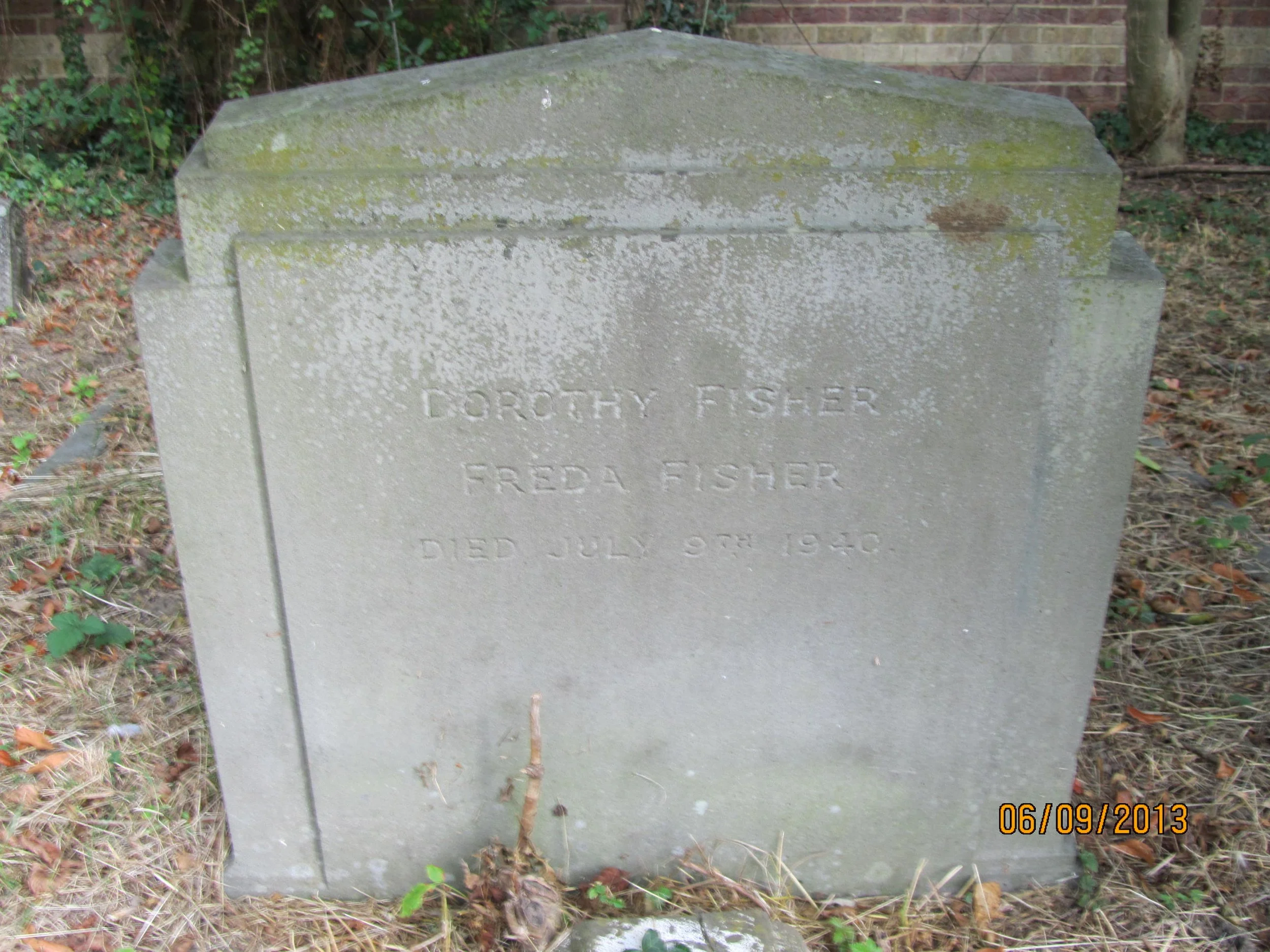
The grave of Dorothy and Freda Fisher in St Andrew’s Closed Churchyard, Paddock Wood
The crime was discovered in the early evening of Tuesday 9th July. Mrs Fisher and her daughter Freda were due to go to tea with Mrs Fisher’s mother Mrs Gibbs an 83 year old who lived about 1 mile from Crittenden. They did not turn up so Mrs Gibbs housekeeper was sent to the public telephone box but got no answer when she phoned Crittenden. Several attempts to phone Mrs Fisher were made between 5 and 6.30 but no-one answered.
Mr Leury, the gardener of Mrs Gibbs, was then asked to go to the property to see what was going on. He found the body of Miss Saunders lying on the path in front of the cottage, and he informed the police. She appeared to have been struck on the head with a blunt instrument. Later, the body of Mrs Fisher was found in a ditch at the boundary of the cottage garden. In court it was confirmed that all three women had died of gunshot wounds fired from a shotgun. Mrs. Dorothy Fisher, aged 48, had two wounds, Freda Fisher aged 20 had three wounds, and Miss Charlotte Saunders, the housekeeper aged 47, one.
Car loads of uniformed and plain clothed policemen descended on the village along with newspaper reporters and photographers. Crittenden was described as being in a sleepy narrow lane running from Standings Cross Matfield to the Paddock Wood to Pembury Road.
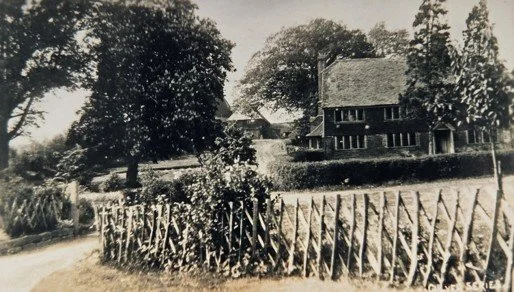
This postcard was entitled “Crittenden”
Kent police called for the assistance of Scotland Yard. Police believed that although the house had been ransacked nothing of value appeared to be missing which suggested that a robbery had been faked to cover up the real reason for the murders.
The story began with the marriage of Mr Walter Lawrence Goetz (later Fisher) of German origin to Dorothy Sanders Pound in 1912. They had two children but theirs was not a happy marriage. When the Fishers ceased to co-habit they continued to share the same house in Richmond and later Twickenham using Crittenden as the family weekend retreat. Both Mr and Mrs Fisher had long term lovers.
In 1938 Mr Fisher bought Carramore Farm near Bicester Oxfordshire and lived there with Mrs Ransom, a widow, who ran the farm for him and whom the locals referred to as Mrs Fisher. She brought three people from London to help her, hiding the fact that they were her mother, her brother Frederick and his wife.
Mrs Fisher moved permanently to Matfield with Mr Fisher visiting her some weekends. He was in Oxfordshire when the police informed him of the murders and immediately headed for Kent where he identified the bodies.
At Tonbridge Police Court the full details of the case against Mrs Florence Ransom aged 34 of Bicester were announced. At the conclusion of the evidence there were over 20 witnesses for the prosecution.
A key piece of evidence found at Crittenden on that day was a glove said to have belonged to Florence Ransom who claimed she may have given the gloves to Freda a few months previously.
A lady’s bicycle was found 50 yards from Crittenden and it was obvious someone had fallen from it. Mrs Ransom had bruises on her body consistent with falling off a bicycle but she claimed to have fallen over on the farm looking for a cat she had lost. Mrs Ransom had recently learnt to ride a bicycle.
The gun used had been bought by Mr Fisher at the request of Frederick Guilford and after having been purchased it had been handed over to Frederick for hunting on the farm. Several weeks before the murder Mrs Ransom had asked her brother to teach her how to shoot as she wanted to shoot rabbits on the farm. She borrowed the gun and some cartridges from her brother on the day before the murder but she returned it several days later with no cartridges.
The stationmaster at Bicester identified Mrs Ransom as a woman who travelled in blue trousers on July 9th and a ticket collector also said Mrs Ransom travelled to Paddington on the day of the murder. A charcoal burner saw the bicycle as he rode past and then saw a woman wearing blue trousers walking towards Tonbridge carrying a paper parcel about a yard long and about four inches wide. He later identified Mrs Ransom as that person. Another witness, a baker from the Alders, Capel provided her with a lift to Tonbridge Station. She was also identified as the woman who caught the train to London. Evidence suggested that the murder appeared to have been pre planned.
Mrs Ransom pleaded not guilty but was committed for trial at the Old Bailey. “I didn’t do it. I didn’t do it. How could I?”
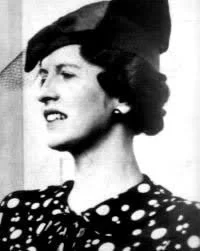
Florence Ransom pictured at the time of her trial
After a trial in November 1940 at the Old Bailey lasting three and a half days Florence Ransom was sentenced to death for murdering her lover’s wife. Right to the end she insisted that she was innocent. The prosecution claimed Florence was jealous because Mrs Fisher would not grant her husband a divorce.
The jury only took forty-seven minutes to return a verdict of guilty on November 12th 1940.
The judge had no choice but to deliver the death penalty but this was overturned on appeal as Florence was judged to be criminally insane. She was committed to Broadmoor from where she was discharged in January 1967, aged 63. She moved to Cardiff, where she died in December 1969. Her probate record gave her name as Florence Iris Ouida Guilford, and she left an estate valued at £139.
By Meryl Flashman of Heritage Paddock Wood
This article is based on contemporary newspaper reports extracted from “Find My Past”.